10% of Go-Go-Go Store Ministry profits support the homeless
    Socials

THE REPRESENTATION GAP

THE REPRESENTATION GAP

WHO SPEAKS FOR AMERICA’S TRUCKERS?

Sunday, August 2, 2026

A Driver’s Perspective Investigation

Report No. ADPI-004

By Will Cook

HOW THIS INVESTIGATION WAS CONDUCTED

This investigation examined publicly available legislation, executive orders, federal regulations, legislative histories, committee proceedings, organizational publications, public letters, interviews, news reporting, industry research, and other records concerning national trucking advocacy, commercial-driver qualification standards, highway safety, and the emergence of American Truckers United.

The investigation did not begin with the assumption that any organization had failed, succeeded, or deserved to replace another. It began with one question: Why did another national trucking advocacy organization emerge when established national organizations already existed?

The findings and analysis that follow are based upon the public record available as of August 2, 2026. Statements concerning the experiences, intentions, opinions, or recollections of individuals are attributed to those individuals and are not presented as independently established fact unless corroborated by official records or additional supporting evidence.

The purpose of this report is not to persuade readers to support or oppose any organization. It is to examine why another national trucking advocacy organization emerged when national representation already existed—and why its message attracted the attention of professional drivers, trucking-business owners, lawmakers, crash victims’ families, industry observers, and members of the public.

PART 1 – THE GAP DID NOT APPEAR OVERNIGHT

Every industry depends upon leadership. In commercial aviation, rail transportation, maritime shipping, manufacturing, agriculture, and countless other sectors, organizations exist to represent the interests of the people and businesses operating within them. They monitor legislation, participate in regulatory proceedings, conduct research, communicate with government officials, and advocate for policies affecting their industries. Because of their experience and institutional knowledge, lawmakers, regulators, journalists, and the public frequently look to these organizations to identify emerging problems before those problems become national crises.

For decades, two organizations occupied that position within American trucking. The American Trucking Associations represented much of the motor-carrier industry, state trucking associations, and commercial transportation interests. The Owner-Operator Independent Drivers Association represented owner-operators, small trucking businesses, and professional drivers. Together they possessed decades of experience, established relationships throughout government, legal and policy expertise, industry research, and national platforms capable of shaping transportation policy and public discussion. With that influence came an equally significant responsibility: not simply to participate in government, but to recognize developing threats and respond with a level of urgency proportionate to the circumstances.

This investigation ultimately asks whether those organizations fulfilled that responsibility—or whether their institutional response proved insufficient to prevent a representation gap from developing that American Truckers United would later occupy.

Long before American Truckers United entered the national conversation, professional drivers and small trucking businesses had already been raising concerns about the direction of the industry. Questions involving licensing integrity, qualification standards, enforcement, and the long-term survival of responsible trucking businesses were not suddenly discovered in 2025. They had circulated for years through truck stops, trade publications, state legislatures, federal agencies, social media, and conversations among the people whose livelihoods depended upon commercial transportation.

During the same period, freight markets weakened, operating costs increased, insurance premiums climbed, and many small carriers either suspended operations or disappeared altogether.

Fatal commercial-vehicle crashes also continued drawing attention to broader questions involving licensing, qualification, hiring practices, and regulatory oversight. Public discussion often focused upon the individual driver involved in a particular collision, yet many professional drivers increasingly argued that those conversations rarely extended to the institutions responsible for licensing, qualifying, hiring, supervising, and regulating the people operating commercial vehicles on America’s highways. The concern extended beyond individual crashes. It became a question of whether the transportation system itself was functioning as intended.

These developments unfolded while the trucking industry’s established representative organizations continued operating through their traditional institutional channels. Legislative participation continued. Regulatory proceedings continued. Policy statements continued. Yet the concerns raised by many professional drivers and small trucking businesses also continued. Businesses closed. Confidence declined. Questions multiplied. The existence of national representation did not prevent a growing number of people from believing that the industry’s most serious concerns were not receiving the level of urgency the circumstances demanded.

That observation does not establish that the established organizations accomplished nothing. The public record demonstrates that both remained active participants in transportation policy. The question raised by this investigation is different. It is whether those institutional efforts produced a response that matched the seriousness of the conditions developing across the industry.

THE QUESTION IS NOT WHETHER TRUCKING HAD REPRESENTATION. IT DID.

THE QUESTION IS WHETHER THAT REPRESENTATION RESPONDED WITH THE URGENCY MANY DRIVERS, SMALL TRUCKING BUSINESSES, AND MEMBERS OF THE PUBLIC BELIEVED THE MOMENT REQUIRED.

Organizations are ultimately judged by more than their history, membership, or access to government. They are judged by whether they recognize danger before it becomes crisis, whether they elevate that danger beyond routine institutional processes, and whether the people they claim to represent believe their advocacy changed the course of events rather than merely documented them.

If national representation had convinced enough people that those responsibilities were being met, another national trucking advocacy organization would have had far less opportunity to emerge.

The fact that one did suggests that, for a significant portion of the industry, the institutional response had not prevented a representation gap from developing.

To read the full report on Substack, click here Read the Full Report.

AMERICA WITHOUT DRIVERS

AMERICA WITHOUT DRIVERS

A Driver’s Perspective

Five or six years ago, America Without Drivers began when I brought together a small group of people who shared a common vision. As time passed, everyone eventually chose a different path. Today, America Without Drivers remains as a record of that early work, while I continue writing through A Driver’s Perspective, with the help of a longtime friend, Jen, who manages my website and edits and publishes both my trucking and Christian books.

Long before many of today’s trucking personalities built large online audiences, America Without Drivers was contacting elected officials, asking difficult questions, and attempting to bring national attention to autonomous trucks. At the time, the subject received relatively little public attention. Today, that conversation has reached the mainstream. Government agencies, carriers, technology companies, industry organizations, news outlets, content creators, and professional drivers are all discussing the future of autonomous trucking. Because of that, I spend far less time writing about autonomous trucks. My attention has shifted elsewhere.

Today, there is no shortage of talking heads, influencers, and self-proclaimed experts producing trucking content. Much of it follows the headline of the day. My work has always taken a different direction. I am less interested in today’s controversy than I am in understanding the SYSTEM behind trucking—the legislation, regulations, organizations, financial incentives, and institutional decisions that shape where this industry is ultimately headed. I prefer to examine the industry from 30,000 feet, looking beyond today’s headlines to the larger forces that will shape tomorrow.

That approach has earned its share of criticism. I’ve been called names, dismissed, and discredited by some of the loudest voices in trucking. That doesn’t concern me. Time has a way of separating temporary opinions from documented history.

Five or six years from now, just as America Without Drivers serves as a historical record of what was being discussed before many others began talking about it, A Driver’s Perspective will provide another record. The difference is that this work is being preserved more intentionally through investigative reports, published books, and a permanent archive designed to document the evolution of this industry. Readers will be able to look back and judge for themselves who was educating drivers, who was documenting facts, and who was primarily building a personal brand.

My goal is not to become another trucking personality. My goal is to preserve the history of a profession that gave me a lifetime of work. If professional drivers spend more time following personalities than understanding the forces reshaping this industry, we risk becoming followers of brands instead of informed advocates for our own future.

In the end, I don’t expect my opinion to be the deciding factor.

The record will speak for itself.

Will Cook
A Driver’s Perspective
August 1, 2026

WHY I WRITE

WHY I WRITE

A Driver’s Perspective

Over the years, many people have asked me where I stand. Some assume I’m against company drivers. Others assume I’m against corporations. Some think I’m only interested in owner-operators or independent trucking. The truth is much simpler than that, and I thought it was time I explained it.

First and foremost, I am a truck driver. For more than three decades, I have made my living behind the wheel. I’ve hauled freight through good markets and bad, watched this industry change, experienced the highs and the lows of trucking, and tried to do my part to represent our profession with integrity. Before I am a writer, before social media, and before anything else, I am simply a working truck driver.

Because of that, I support drivers. I support truck drivers, bus drivers, delivery drivers, heavy-haul drivers, owner-operators, and company drivers alike. If you’re out here legally, properly trained, and committed to doing the job safely, then I respect what you do. Transportation is one of the foundations of this country, and the men and women who move people and freight deserve to be respected. My record over the last thirty-plus years reflects exactly where my heart has always been.

I also believe deeply in opportunity. One of the things that has always made America different is that ordinary working people could build something of their own. Whether it’s one truck, one bus, one landscaping company, one construction business, one restaurant, or any other small business, I believe people should have the opportunity to work hard, take risks, and build a better future for themselves and their families.

That doesn’t mean everyone should own a business. Many people prefer working for a company, and there is absolutely nothing wrong with that. Every successful company depends on dedicated employees. We need good company drivers just as much as we need good owner-operators. I have never believed one is more valuable than the other.

I’m not against corporations either. Large companies have created jobs, developed technology, invested billions of dollars, and helped move our economy forward. They absolutely have a place in America. My concern begins when large corporations use their influence to shape public policy in ways that make it harder for small businesses and working people to compete. I believe competition should be decided in the marketplace, not by who has the largest lobbying budget or the greatest political influence in Washington.

I believe America is strongest when there is balance. We need successful corporations. We need thriving small businesses. We need company drivers. We need owner-operators. We need entrepreneurs who are willing to take risks, and we need hardworking employees who help businesses succeed. One should not come at the expense of the other. Everything I write comes from that perspective. I believe in honest work. I believe in safe, professional drivers.

I believe in protecting the opportunity for someone to build a business if they’re willing to earn it. I believe in preserving competition and independence. Most of all, I believe the American Dream should still be within reach for the next generation of working men and women. That is why I write. Not to divide drivers, but to support them. Not to attack success, but to protect opportunity. Not to tear down corporations, but to make sure working people and small businesses still have a place at the table. If we can preserve that balance, then I believe America, and the trucking industry will be stronger because of it.


Will Cook
A Driver’s Perspective

June 18, 2026

CREATING TRUCK OWNERS: THE DREAM IS STILL ALIVE

CREATING TRUCK OWNERS: THE DREAM IS STILL ALIVE

The Incentives Conversation – Nobody Wants to Have

From A Driver’s Perspective

Over the last several days, I have written about something that I believe sits at the center of trucking’s future but rarely receives the attention it deserves. First, I wrote about the part they never talk about. Then I wrote about how we create more truck owners. The more I thought about those articles, the more I kept coming back to the same conclusion.

It all revolves around incentives.

Incentives determine behavior. Incentives determine policy. Incentives determine what businesses invest in, what organizations fight for, and ultimately what kind of industry emerges over time. When I look at trucking today, I do not believe we are witnessing an accident. I believe we are witnessing the predictable outcome of incentives that have been shaping the industry for years.

One of the best examples is the lease-purchase debate.

For years, we have heard about predatory lease-purchase programs. We have seen investigations, lawsuits, documentaries, and countless stories about drivers who entered agreements only to lose money and walk away with nothing. Some of those criticisms are absolutely justified. There have been bad contracts, bad programs, and situations where people were set up to fail before they ever turned the key.

But there is a question hiding underneath that entire conversation.

If ownership is such a terrible idea, why do so many people continue chasing it?

If nobody wanted to own a truck, lease-purchase programs would disappear overnight. Nobody would sign the contracts. Nobody would take the risk. Nobody would be willing to sacrifice their time, money, and energy trying to build something of their own.

Yet the demand remains.

That tells me something important.

The dream is still alive.

Despite everything that has happened over the last decade, people still want independence. They still want ownership. They still want the opportunity to control their own future instead of spending an entire career working for someone else.

In fact, I see evidence of that every day.

Spend a little time watching what is happening in the hotshot industry. People are buying pickup trucks, purchasing trailers, obtaining authority, hauling cars, RVs, campers, equipment, and partial freight all over the country. Some succeed. Some fail. That has always been true in business.

The important point is that they are still trying.

The desire to own something has not disappeared.

The desire to build something has not disappeared.

The desire for independence has not disappeared.

What has changed is that much of the industry’s conversation no longer focuses on helping people achieve ownership. Instead, it often focuses on why ownership is dangerous, risky, or unrealistic.

That should concern anyone who believes trucking should continue providing opportunity for working-class Americans.

For generations, trucking represented one of the few industries where an ordinary person could enter with very little, learn the business, save money, buy equipment, obtain authority, and build something of their own.

Some remained one-truck owner-operators.

Some built small fleets.

Some built successful companies.

The path was never easy, but it existed.

Today, that pathway feels increasingly under pressure.

Insurance costs have exploded. Equipment costs have exploded. Regulations have increased. Compliance requirements have increased. Barriers to entry have increased. At the same time, larger carriers have become larger, consolidation has accelerated, and corporate influence throughout the industry has grown significantly.

Again, that is not an accident.

It is the result of incentives.

For years, the incentives rewarded scale. They rewarded larger fleets. They rewarded consolidation. They rewarded capacity. They rewarded finding additional labor pools. They rewarded corporate growth.

What they did not reward was creating more independent truck owners.

That distinction matters because ownership and labor are not the same thing.

Much of today’s trucking conversation revolves around labor. We hear discussions about labor shortages, labor supply, labor recruitment, labor retention, and labor costs.

What we rarely hear is a serious discussion about creating owners.

Where are the conversations about helping people become owner-operators?

Where are the conversations about making startup insurance more affordable?

Where are the conversations about creating financing pathways that help working people purchase equipment?

Where are the conversations about teaching business ownership instead of simply filling another seat?

Where are the conversations about protecting the pathway that once allowed an ordinary driver to become an independent business owner?

Those questions rarely receive the attention they deserve.

Instead, much of the discussion focuses on maintaining capacity.

When I look at many of the debates happening today, I cannot help but notice how connected they really are.

The lease-purchase debate.

The owner-operator debate.

The labor debate.

The immigration debate.

The safety debate.

The consolidation debate.

All of them connect back to incentives. For years, I have watched the industry search for additional capacity while independent operators continued disappearing. I have watched barriers rise for people trying to build legitimate trucking businesses while large corporate interests continued expanding. I have watched discussions about driver shortages dominate headlines while discussions about creating truck owners remained largely absent.

That should raise questions.

If trucking truly needs people, why are we not creating more American truck owners?

If trucking truly values opportunity, why are we not building stronger pathways from company driver to owner-operator?

If trucking truly values safety, why are we willing to aggressively enforce some rules while appearing far less concerned about enforcing others?

The recent attention being given to non-domiciled CDLs, English proficiency requirements, licensing standards, and enforcement issues has only reinforced those questions.

Regardless of where someone stands politically, equal standards should matter.
Consistent enforcement should matter.

Safety should matter.

Yet from my perspective, the larger issue is still incentives.

For years, the industry benefited from policies and business models that increased capacity. The question I keep coming back to is whether those same incentives came at the expense of the independent owner-operator.

While everyone was talking about filling seats, very few people were talking about creating owners.

While everyone was talking about labor, very few people were talking about independence.

While everyone was talking about capacity, very few people were talking about opportunity.

That is why I continue to believe the independent pathway matters.

An industry that creates owners, spreads opportunity.

An industry that only creates employees, limits opportunity.

One creates independence.

The other creates dependence.

This is not an argument against company drivers. Every owner-operator starts somewhere.

This is not an argument against growth. Businesses should be free to grow.

It is simply an argument for preserving the pathway that once allowed an ordinary working person to build something of their own.

Because despite everything that has changed, despite the regulations, despite the costs, despite the risks, despite the headlines, and despite the warnings, people continue chasing ownership.

The hotshot operators prove it.

New authorities prove it.

Every person willing to risk their savings and bet on themselves proves it.

The independent spirit that built trucking is still out here.

The dream is still alive.

The real question is whether anyone is still willing to fight for it.

Because if we stop creating owners, eventually the only people left owning anything will be the people who already own everything.

Will Cook
Just “A Driver’s Perspective”

June 15, 2026

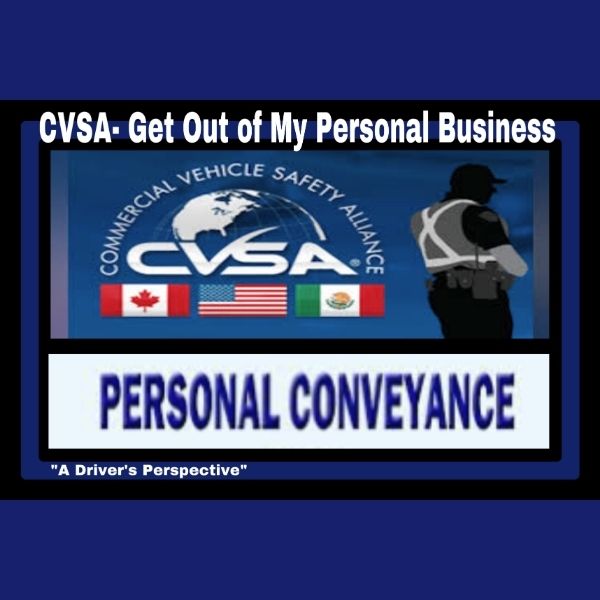
Get Out of My Business: The Truth About CVSA’s Push to Limit Personal Conveyance


Get Out of My Business:

The Truth About CVSA’s Push to Limit Personal Conveyance

Let’s Start With the Basics
If I’m making the payments on my truck – whether it’s leased or bank-financed – the CVSA has no business telling me how I can use it when I’m off the clock.

I pay the insurance.
I pay the plates.
I pay the IFTA fuel tax, the highway use tax, the fuel itself.

If I want to climb into my truck on my personal time and drive it across the state to visit family, take a vacation, or just go for a long drive, that’s between me, my wallet, and God. Not the CVSA.  Not the FMCSA.  Not anybody else.

Why This Is Even a Discussion
The CVSA claims they need to put a two-hour daily cap on personal conveyance (PC) because some drivers are “cheating” – using PC to advance their loads or bypass Hours-of-Service limits.

This isn’t the first time they’ve tried it.

  • 2020 – CVSA petitions FMCSA for PC limits.  Denied.
  • 2022 – They try again.  Denied.
  • May 2025 – CVSA’s board approves a formal proposal for a two-hour daily cap.
  • July 29, 2025 – CVSA tells the U.S. Senate they’ve seen “40% misuse” in audits and claims some drivers use PC for up to ten hours.  They say it’s a fatigue and safety risk.
  • Now – They’re preparing their third petition to FMCSA.

As of August 12, 2025, the FMCSA has not changed its rules.  PC still has no federal time or distance limit, so long as you’re relieved from work responsibilities and not operating for the carrier’s benefit.

Who’s Actually Behind CVSA
The CVSA isn’t a corporate lobbying group.  It’s run by senior enforcement officials from state motor vehicle and highway patrol agencies:

  • Capt. John Hahn – President, Colorado State Patrol
  • Maj. Erick McGuire – Vice President, Florida Highway Patrol
  • Sgt. William Alarcon – Secretary, New Jersey State Police

These are career enforcement professionals, not politicians.  Their mission is road safety and rule enforcement – but that’s exactly why their proposals often go for broad, measurable rules instead of targeted enforcement.

The Safety Claim – and the Reality
Here’s the truth: there’s no confirmed fatal accident on record that was directly caused by PC misuse alone.

  • Fatigue-related accidents are real, yes – but PC misuse is only a potential indirect factor.
  • CVSA’s own argument is that misuse makes Hours-of-Service violations harder to detect.
  • Even so, with GPS, ELDs, and cameras, catching real abuse is easier than ever.

If enforcement agencies can’t detect when someone’s advancing a load under PC with all that technology in place, that’s an enforcement problem – not a personal conveyance problem.

What This Really Benefits
A hard time cap on PC makes life easier for enforcement agencies – not safer for the public.

  • It turns a judgment call into a stopwatch.
  • It eliminates officer discretion and replaces it with a number.
  • It sweeps up every driver, including the 60% or more who are using PC exactly as intended.

And let’s be clear – it benefits large carriers more than independent drivers.  Mega carriers already micromanage their drivers and often set their own internal PC caps.  This just levels the playing field in their favor by imposing those limits industry-wide.

The Legal and Rights-Based Problem
Statutory Definition

FMCSA defines PC as:
“The movement of a commercial motor vehicle for personal use while the driver is off-duty, provided the movement is not for the benefit of the motor carrier.”

There is no time or distance limit in that definition.

Property & Business Rights

  • As an owner-operator, your truck is your personal property as well as your business tool.  The federal government’s power to regulate it applies when you’re in commerce – not when you’re off duty.
  • Under the Fifth Amendment, you can argue that arbitrary restrictions on personal use of your own property without a compelling, narrowly tailored safety reason step toward infringement of property rights.

Constitutional Overreach
Because PC is by definition off duty, it sits outside the scope of active interstate commerce regulation.  Trying to limit it without clear safety data is legally shaky at best.

If They Really Want Safer Roads…
Start where the real problems are:

  • End trainees training trainees in mega carriers.
  • Require proper training and English proficiency for all CDL holders.
  • Tighten oversight on non-domiciled CDL holders who are fast-tracked into the system with minimal supervision.

Those changes will save lives.  Limiting PC won’t.

The Enforcement Fix – Without Overreach
If someone abuses PC to advance a load or dodge HOS limits:
1.      Use the tech that’s already in the truck to catch them.
2.      Fine them heavily – make it hurt.
3.      Apply the penalty to the violator, not the entire industry.

Bottom Line
Right now, CVSA’s proposed PC cap is just that – a proposal. It has no legal force unless FMCSA adopts it through rulemaking. And if they do, they’ll have to defend it against property rights arguments, lack of safety data, and a clear overreach into the personal lives of truck owners.

Until then, and even after, I’ll say it as loud as I can:

Get.  Out.  Of.  My.  Business.

Will Cook | A Driver’s Perspective
WHO HOLDS THE PEN: WHERE TRUCKING BILLS REALLY BEGIN IN THE SENATE

Who Holds the Pen: Where Trucking Bills Really Begin in the Senate


This is part of my Know Who Holds the Pen series – and the last in this 4-part series.  The final book, releasing by the end of August, will go even deeper into this topic and show drivers exactly who to contact before a bill ever makes the news.

The Question Most Drivers Never Ask
If you’re like most people, you probably think new laws for truck drivers start with one senator, one idea, and one vote.  That’s not how it works.

The truth is, every bill has to start in a “committee” before it goes anywhere else.  And where it starts often decides if it lives, dies, or gets changed into something completely different.

Think of a committee like a “dispatch office” for laws.  It’s where the freight – in this case, a bill – first shows up.  And just like freight, if it goes to the wrong dock, it’s not going anywhere fast.

What Is a Senate Committee?
A Senate committee is a group of senators who focus on one main area – like transportation, labor, veterans, finance, or agriculture.

Each committee is like its own mini-Senate.  They hold hearings, invite witnesses, change the bill, and decide whether to send it to the full Senate for a vote.

If the committee doesn’t like the bill, it might never move forward.  That means most laws live or die long before you ever hear about them on the news.

  • Three Real Trucking Bills and Where They Went:
  • Commercial Motor Vehicle English Proficiency Act
    1. What it says: You can’t get a CDL unless you can read, write, and understand English. No written tests in other languages.
    2. Where it went: The Senate Commerce, Science & Transportation Committee.
    3. Why there: This committee is in charge of road safety, driver qualifications, and transportation policy. Since this bill is about safety and qualifications, it goes here.
  • Strengthening Supply Chains Through Truck Driver Incentives Act
    1. What it says: Gives drivers tax credits – up to $10,000 for new drivers or apprentices, and $7,500 for experienced ones – to help keep CDL holders in the job.
    2. Where it went: The Finance Committee (because it’s about taxes) and sometimes the Health, Education, Labor & Pensions Committee (HELP) if the bill focuses on jobs, training, and keeping workers.
    3. Why there: It’s part tax law and part labor policy.
  • Veterans’ Transition to Trucking Act of 2025
    1. What it says: Makes it easier for the VA to approve multi-state trucking apprenticeship programs so veterans can start working sooner.
    2. Where it went: The Veterans’ Affairs Committee.
    3. Why there: Even though it’s about trucking, it’s really about veterans’ benefits – so it’s not considered transportation or labor for the purpose of where it starts.

How This Looks in Plain Words
The English Proficiency for CDLs bill went to the Commerce Committee because it’s about road safety.

The Truck Driver Tax Credit bill went to the Finance Committee because it’s about money – and it could also go to the Labor (HELP) Committee because it’s about keeping jobs filled.

The Veterans’ Trucking Apprenticeship bill went to the Veterans’ Affairs Committee because it’s about helping veterans get jobs, not about roads or wages.

What About Non-Domiciled and Visa Drivers?
Now let’s talk about something big that a lot of drivers bring up – non-domiciled drivers (people licensed here but living in another country) and visa drivers (foreign drivers brought in through a work visa program).

That’s not a transportation issue – it’s a labor issue.  Why?  Because it’s about who is allowed to work here, how they’re classified, and what the wage rules are.

That means bills about non-domiciled drivers or visa driver programs would go in front of the Health, Education, Labor & Pensions Committee in the Senate – the same one that handles workplace rules, training, and labor protections.

This is huge, because if you’re fighting against unsafe driver programs, low wages, or job displacement by foreign labor, you’re not just fighting a trucking fight – you’re fighting a labor fight. And the senators who decide labor bills might not even be the ones who normally touch transportation laws.

Why Committees Decide the Fate of Trucking Laws
Here’s why all this matters:

If you’re a driver and you want a bill passed (or stopped), you need to know which committee has it.

That’s the group of senators you have to contact. That’s where the hearings will happen. That’s where the bill will get stronger or weaker.

If you’re aiming your message at the wrong senators, you’re wasting your voice.

How This Will Be Covered in the Fourth Know Who Holds the Pen Book
In the fourth book in this series, we’re going to dig deep into every Senate committee that handles trucking-related bills – from transportation to labor to finance.  We’ll show you:

  •      The names of the senators on each committee
  •      Which states they represent
  •      How to contact them directly
  •      Examples of bills they’ve handled in the past


We’ll also break down how to track a bill’s movement, so you know exactly when to speak up, before the media ever runs the story.

Committee Bill Example Reason It Went There
Commerce, Science & Transportation English Proficiency for CDLs Focuses on road and safety regulations
Finance/HELP (Labor-related) Truck Driver Tax Incentives Blends tax policy with workforce retention
Veterans’ Affairs Veterans’ Apprenticeship Approval Reform Centers on veterans’ benefits, not trucking


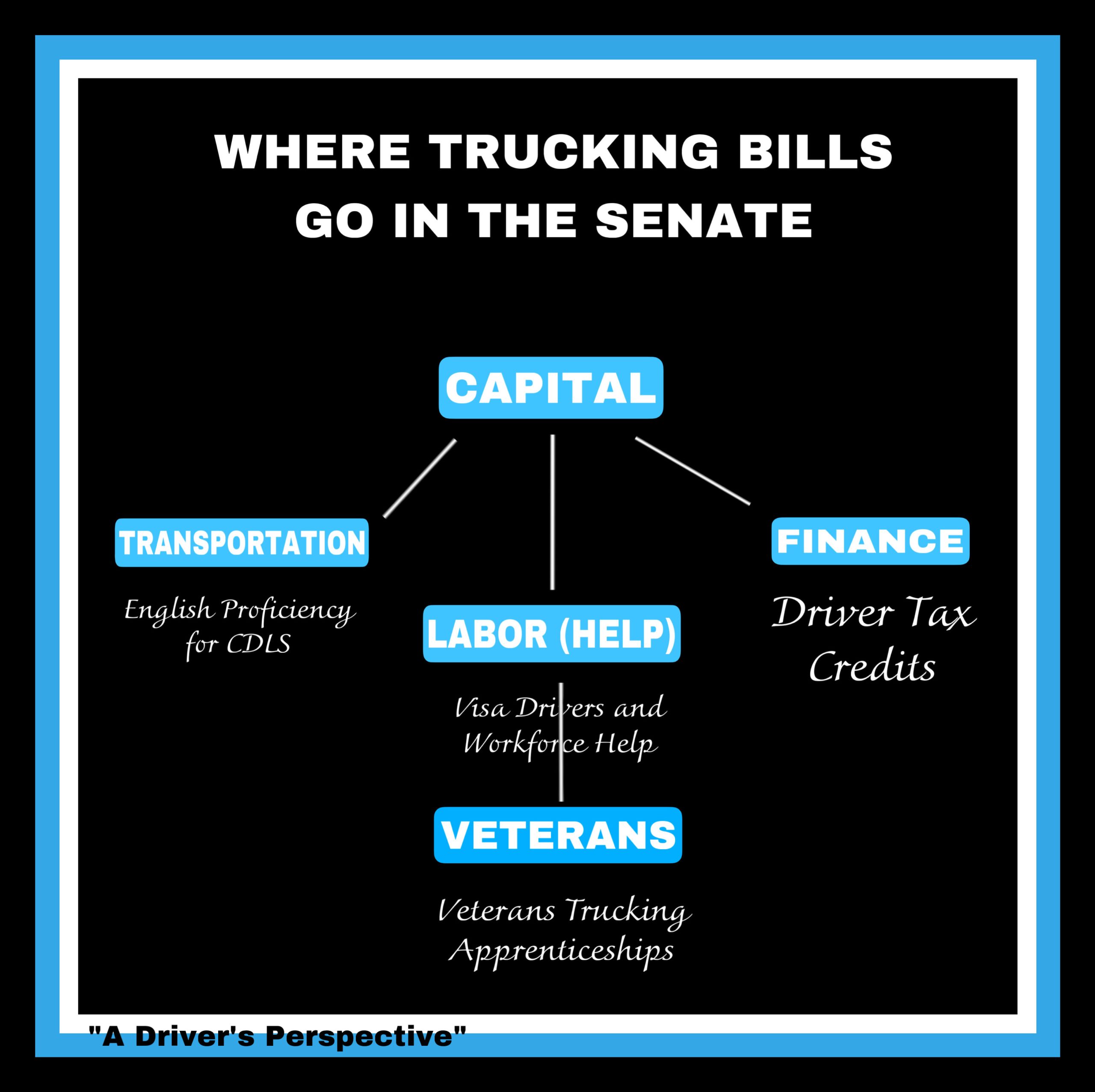
Side Note: See the chart above for a visual breakdown of where trucking bills go in the Senate. 

Each committee has a different role:

  •      Transportation – road safety, driver qualifications, CDL rules
  •      Labor (HELP) – visa drivers, workforce rules, job training
  •      Finance – tax credits and incentives
  •      Veterans – trucking apprenticeship programs for veterans

Some bills may also pass through other committees like Infrastructure (highway funding, freight corridors) or Homeland Security (border, port, and hazmat oversight).

The Bottom Line for Drivers
Bills about trucks don’t all go to the same place. Some are about road safety, some are about taxes, some are about jobs, and some are about veterans. And when it comes to labor issues like visa drivers, you’re in a whole different part of the Senate.

If you want to protect your job, your pay, and your industry, you have to know who holds the pen – because that’s who writes the first and most important version of the law.

Will Cook | A Driver’s Perspective

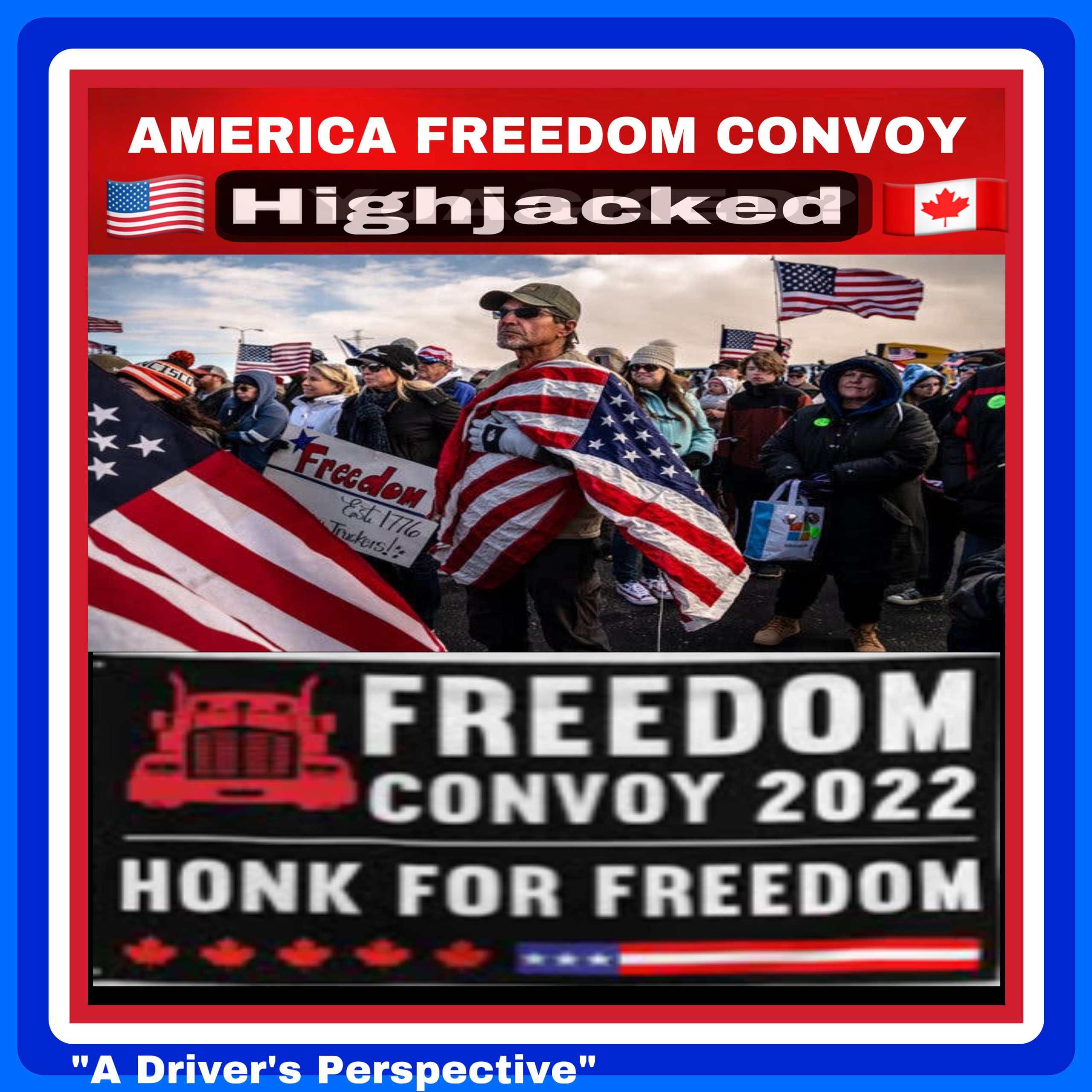
FREEDOM CONVOY: HIJACKED

FREEDOM CONVOY: HIJACKED

We Had a Chance to Stand With the World
But Instead We Stood in a Parking Lot

Was America’s Freedom Convoy Stolen from the People?

[This article is based on publicly available information, news reports, and personal analysis. It is intended for educational and commentary purposes protected by the First Amendment. All statements reflect events that occurred in the public eye or are commentary on public movements and figures.]

The Original Freedom Convoy – 🇨🇦 Canada, January 2022
The Freedom Convoy began on January 22, 2022, as a grassroots protest by Canadian truckers opposing COVID-19 vaccine mandates for cross-border drivers.  What started with a handful of working-class truckers quickly grew into a national movement and then into a global symbol of resistance against government overreach and pandemic-era authoritarianism.

Thousands of trucks and supporters converged in Ottawa, parking near Parliament Hill and refusing to leave until mandates were lifted.  The protest was peaceful, determined, and organized – with citizens from all walks of life joining in to demand liberty.

Let this be clear: the movement was never called The People’s Convoy.  It was known globally and universally as the Freedom Convoy, and it represented more than truckers – it became a worldwide rallying cry for liberty.

The Global Response – Who Stood with the Freedom Convoy?
Inspired by what happened in Canada, a wave of similar movements spread across the globe.  These weren’t just anti-vaccine protests – they were expressions of widespread frustration against years of top-down control and the abuse of emergency powers.

Here’s a breakdown of the global response:

  • 🇦🇺 Australia launched the Convoy to Canberra in February 2022.  Thousands of vehicles descended on the capital, openly crediting Canada as the inspiration.
  • 🇳🇿 New Zealand organized Convoy 2022 NZ. Like Canada, trucks and supporters occupied the area around Parliament in Wellington.
  • 🇫🇷 France staged the Convoi de la Liberté. Thousands flooded into Paris in open defiance of health pass mandates, many waving Canadian flags.
  • 🇧🇪 🇮🇹 🇪🇸 Belgium, Italy, and Spain each had Freedom Convoy-style protests, focused on opposing COVID restrictions and rising government control.
  • 🇮🇱 Israel held a Freedom Convoy to Jerusalem, driven by everyday citizens who were tired of restrictions and creeping authoritarianism.

In every case, these movements cited the Canadian Freedom Convoy as the spark. The name “Freedom Convoy” – translated into each local language – became the shared banner for a worldwide movement.

Then came the United States.

Trump Calls for a U.S. Freedom Convoy
As Canada’s Freedom Convoy gained global attention, former President Donald Trump publicly praised the truckers and called for a similar movement in America.

“We want those great Canadian truckers and those around the world to know that we are with them all the way.  We want the Freedom Convoy to come to America.”                                                  –     Donald J. Trump, February 2022

Take note: Trump used the term “Freedom Convoy.”  Not once did he call it “The People’s Convoy.”  He called for unity under a banner that had already inspired global solidarity.

The moment was wide open.  The people were ready.  And the movement could have continued – until it was redirected.

Hijacked in the U.S. – Enter The People’s Convoy
Shortly after Trump’s remarks, a group of U.S.-based organizers launched a convoy from California.  But instead of continuing under the Freedom Convoy name, they branded it something else: The People’s Convoy.

At the same time, a man named Brian Hinsen (known as “Von D” from Conway, Arkansas), who had ties to the original Canadian effort, was already organizing a Freedom Convoy USA. His team had a name, a plan, and early support.  But when Mike Landis and others got involved, everything changed.

Social media arguments erupted.  The Freedom Convoy name was dropped. And a new leadership circle stepped in, bringing with them a new name, new narrative, and a tighter grip on control.

What started as a grassroots movement transformed into a branded, livestreamed, and carefully managed spectacle.  And it didn’t take long before cracks began to show.

What Went Wrong at Hagerstown
The People’s Convoy made it across the country and arrived at Hagerstown Speedway in Maryland – and then it stopped.  What began as a rolling protest turned into a stationary camp.

As time passed, the issues grew louder:

Money and donation transparency became a major concern.

Organizers clashed over direction, control, and leadership.

Brian Brase, one of the lead spokesmen, resigned in May 2022, citing internal mismanagement and loss of purpose.

Some participants were pushed out or publicly criticized for asking hard questions.

Social media influencers dominated the messaging while many working-class drivers quietly left, disappointed.

What could have been a defining moment for liberty in America became a fragmented, ego-driven operation with no clear results.

A Pattern That Keeps Repeating
If this all sounds familiar, it’s because we’ve seen it before.

Back in 2020, during the Mayday protests in Washington, D.C., a grassroots movement led by Rick Santiago gained momentum – only to be overtaken by some of the same familiar faces.  The name changed.  The leadership changed.  The message changed.  And the movement fizzled out.

This is the cycle:

      • A legitimate grassroots uprising begins.
      • A small circle of figures steps in and seizes control.
      • Donations surge. Messaging becomes vague. Infighting begins.
      • The movement collapses – and the people who gave their time, energy, and money are left betrayed.

We’ve seen it.  Again and again.

Final Thought: What We Lost
When Donald Trump called for a Freedom Convoy, he was urging Americans to join a worldwide movement for liberty.  What we got instead was a rebranded operation that turned inward, lost its momentum, and failed to deliver any lasting change.

This isn’t about attacking individuals. It’s about recognizing a repeated pattern.  And when the same people keep showing up at the center of failed movements, we have to ask the hard questions:

                   Who’s really behind the curtain?
                   Are political players or donor networks pulling the strings?
                   Are working-class movements being hijacked on purpose?

Side Note: [USTA – Leadership and inner circle seem to end up in lead roles and inner circles.]  We’ve seen the same people support and go from CDL-Drivers Unlimited to now American Truckers United.  The silent few that always seem to participate in failing movements.

A Warning and a Question
There’s possibly another movement rising.  You can feel it.  American truckers are seeing through the smoke screen and are ready to take a stand.  But the question is: Will we let it be hijacked again?

Because if we do, we already know how it ends:

     • Same inner circle.
Same excuses.
Same disappointment.

If we want truth, we have to protect it.  If we want freedom, we have to define it.  If we want a movement that actually lasts, we have to guard the message – from grifters, from influencers, from opportunists, and from false leaders.

This is no longer just a political issue.  It’s a spiritual battle.  And time is running out.

Just A Driver’s Perspective
The People’s Convoy is still an unfinished story.  No clear accounting for donations.  No real answers about who made the decisions.  No justice for those who participated in good faith.

Until the full truth is revealed, I’ll call it like I saw it:

Another hijacking – by talking heads, self-appointed advocates, and opportunists looking for attention and a payday.

Author’s Note:
Ask yourself – where were the working-class show trucks?  Where were the associations?  Where were the trucking country singers?  Senator Ted Cruz made an appearance in Maryland, but that was obviously – looking back – a political stunt.

I talked to a journalist from the LA Times.  I’ve talked to people who were in the convoy from beginning to end.  I watched the entire thing.  I was personally involved in Mayday.  I spoke to Rick Santiago and Sean McIntosh while it was happening – actually before one truck parked in DC for Mayday – I was on those calls.  I have messages from the People’s Convoy.  Yes, I have receipts.
I know more than I write – and that’s why I keep writing.  Because I know the players.  I’ve seen the pattern.  And I’m going to keep exposing it.

In my personal opinion, the same people who hijacked Mayday hijacked the Freedom Convoy or allowed it to be hijacked.  And yes – it should have been the American USA-Freedom Convoy, not the People’s Convoy.  We had a chance to stand with the world – and instead, we stood in a parking lot.

Will Cook | A Driver’s Perspective

References

  1. “Canada Convoy Protest.” Wikipedia
  2. “Ottawa Trucker Convoy Galvanizes Far-Right Worldwide.” Politico, Feb. 2022
  3. “DC Convoy Leader Brian Brase Resigns.” Washington Post, March 18, 2022
  4. “The So-Called Freedom Convoy Was Never About Truckers.”  Truck News
  5. “US Convoy Inspired by Canada Launches from California.”  The Guardian, Feb. 2022
  6. “Freedom Convoy: What to Know.” Council on Foreign Relations (CFR)
  7. “Convoy Movement Isn’t a Struggle Over Freedom.” Truthout, 2022
  8.  Additional reports from Reuters, Business Insider, and FreightWaves

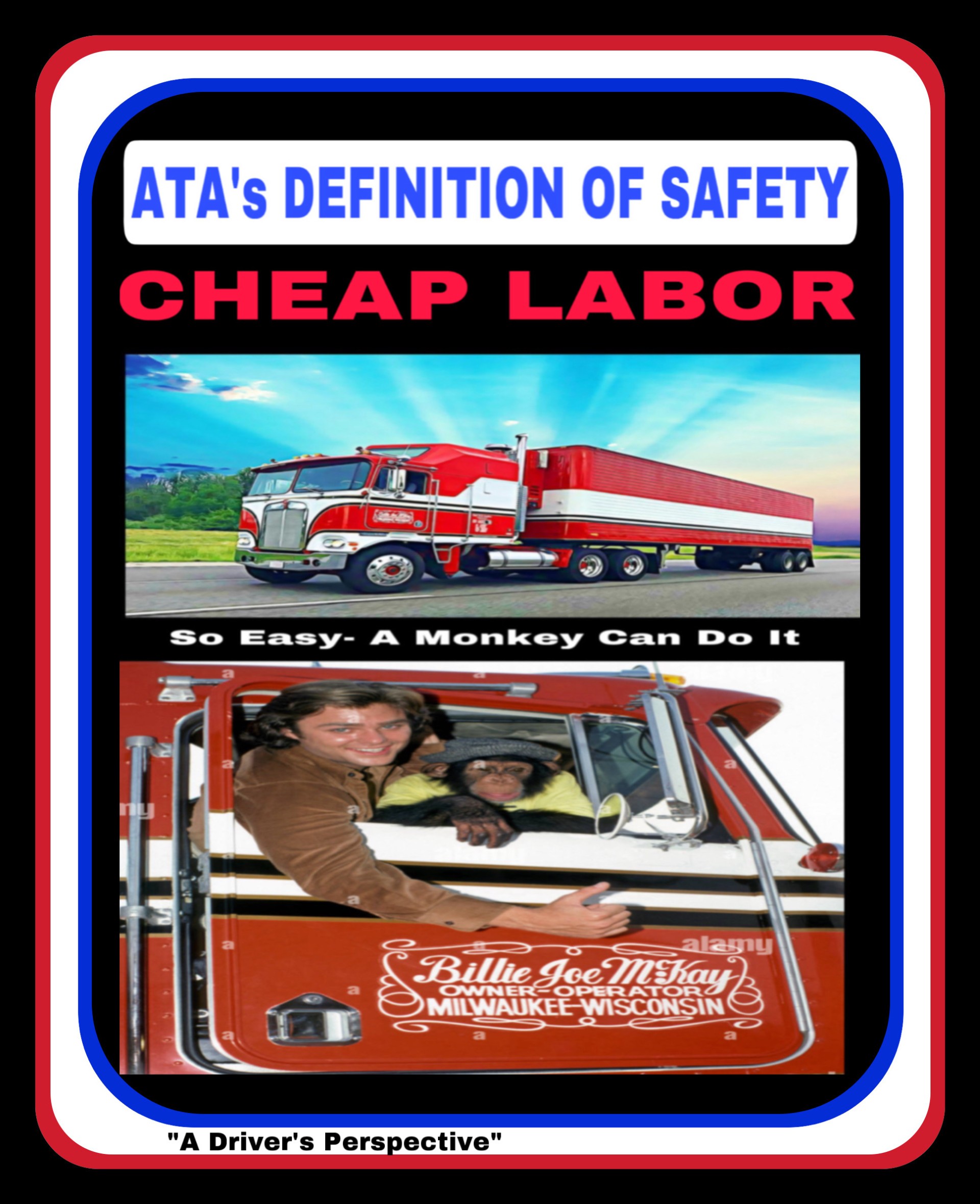
ATA’S DEFINITION OF SAFETY

ATA’S DEFINITION OF SAFETY
[CHEAP LABOR]

Today’s Safety Features Aren’t About Safety:
They’re About Replacing Skilled Drivers With Cheap Labor

Let’s stop pretending these so-called “safety” features on modern semi-trucks are really about protecting the public. They’re not.

They’re about replacing skilled drivers with less-trained, cheaper, more compliant labor – and eventually, replacing drivers altogether.

From lane departure systems to automatic emergency braking, radar cruise control to collision mitigation sensors, side radar, inward-facing cameras, orange seatbelts, and bright yellow grab handles – none of this was added to support experienced drivers. These tools were never for the men and women who know how to drive. They were rolled out the moment mega carriers started slashing their training budgets.

These systems aren’t there to make the job safer – they’re there to make the driver less necessary.

The Real Goal: Deskilling the Job
Every year, new trucks are built with more sensors, cameras, and automation systems. But what’s really happening is a quiet transformation – from trained professionals behind the wheel to tech-reliant, entry-level bodies with just enough instruction to get by.

That’s not a coincidence.

These systems are meant to:
• Replace training with technology
• Justify hiring low-skill, low-wage labor
• Shift liability from the carrier to a digital scapegoat
• Control every move the driver makes

Train them less.
Pay them less.
Monitor them more.
Replace them sooner.

The closer they get to making the truck “foolproof,” the closer they are to removing the fool altogether. And make no mistake – they’re not talking about AI. They’re talking about us.

Who’s Behind It? The Mega Carriers – and Their Manufacturers
Let’s name names.

The carriers who first embraced this tech didn’t do it because they care about public safety. They did it to compensate for the fact that they were no longer investing in actual training. When companies like C.R. England, Werner, Prime Inc., CRST, Stevens Transport, U.S. Xpress, and Knight-Swift started putting new drivers behind the wheel with barely a few weeks of instruction, they needed a way to protect their liability and keep their contracts.

So they turned to automation.

They didn’t just cut corners – they created entire training models that fast-tracked CDL holders into trucks without the supervision of seasoned drivers. The so-called “first seat/second seat” model became the new standard – meaning a driver with six months of experience was now training someone with zero real-world driving time.

In some cases, it was less than that.

This wasn’t mentorship. It was peer babysitting. It was a survival tactic – not a training program. And while that was happening, these carriers were lobbying for federal funding, exemptions, and fast-track visa approvals to bring in more labor with fewer questions asked.

Meanwhile, manufacturers like Freightliner, Volvo, and International were more than happy to outfit their trucks with whatever systems would help carriers keep payroll cheap and control tight – lane sensors, following distance alerts, fatigue monitors, and auto-brake systems that treat professional drivers like toddlers with tantrums.

It wasn’t about helping the driver. It was about managing the risk while hiring people who barely understood the job.

CDL Schools Aren’t the Problem – The Carriers Are
Let’s clear something up. CDL schools are not to blame for the lack of training. Their job is to prepare students to pass the test and legally obtain a commercial driver’s license. That’s it.

Real training – the kind that teaches you how to survive on the road, how to handle freight, how to make decisions under pressure – that’s the job of the carrier.

So when mega carriers run their own CDL schools, get drivers licensed, and then immediately put them into a truck with another rookie driver, that’s not a school failure. That’s corporate exploitation.

And they’re using automation to mask that failure.

They’re not investing in skilled mentorship. They’re investing in lane-assist tech and collision warning sensors – because they’d rather have a driver who’s dependent on hardware than one who knows what to do in the moment.

Brokers and Visa Drivers: The Next Phase
This problem doesn’t stop with the big carriers. Just look at today’s lease-purchase programs, broker networks, and platforms like Landstar. Many of the trucks showing up under their banner are now operated by non-domiciled visa drivers, funneled in through legal loopholes, third-party logistics networks, or questionable CDL mills.

These trucks are also outfitted with the same automation systems. The same electronic leash. The same carrier-issued control.

And it’s not a coincidence.

Visa labor is cheaper. Easier to control. Easier to replace. And when you pair it with automation, you’ve got the ultimate corporate dream: low-cost drivers in high-tech trucks who never ask questions and never push back.

This isn’t an upgrade. It’s an engineered collapse of the skilled American trucking workforce – replaced by tech-dependent labor that works for less and disappears on demand.

The Industry Doesn’t Want Skilled Labor – It Wants Control
Here’s what you need to understand:

Skilled drivers solve problems. They think critically. They make calls that save freight, protect lives, and keep this economy moving.

But that kind of independence doesn’t serve the corporate machine.

What they want is control. What they want is submission. And if they can’t get that from experienced professionals, they’ll build a new workforce that does whatever the computer tells them – until the day they can unplug the human altogether.

That’s not safety. That’s surveillance. And it’s not for our benefit – it’s for our elimination.

Bottom Line
This industry is being automated, corporatized, and quietly overhauled – not for the public good, but for corporate gain.

If you think this is about reducing crashes, look around. If you think it’s about saving lives, ask why experienced drivers are being pushed out while carriers promote teen CDL pilots and 90-day trainees. If you think it’s about making trucking easier, ask why more and more truckers are being replaced with app-controlled labor from overseas.

This isn’t progress. This is a betrayal.

The ATA calls it safety. But drivers know the truth:
The safety systems aren’t for us.
They’re for our replacements.

Will Cook | A Driver’s Perspective
IT WAS NEVER ABOUT SAFETY!

IT WAS NEVER ABOUT SAFETY!

If ELDs Are So Safe, Why Do Livestock Haulers Need an Exemption?
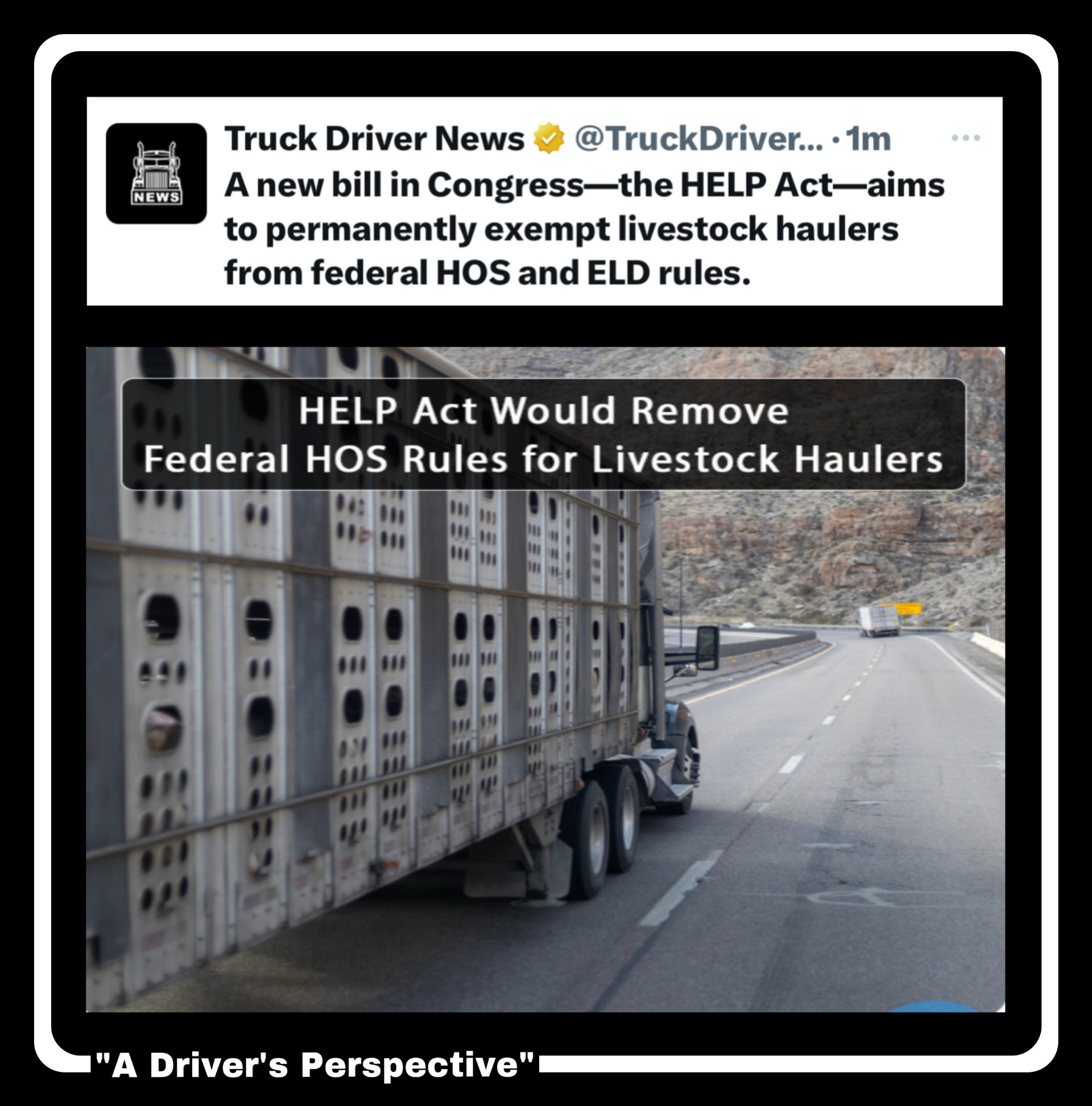
This week, Truck Driver News reported that Congress is once again pushing to exempt a specific group of drivers from federal Hours of Service (HOS) and Electronic Logging Device (ELD) regulations – this time under the newly introduced HELP Act (Hauling Exemptions for Livestock Protection Act), spearheaded by Rep. William Hurd of Colorado.

If passed, the bill would permanently exclude livestock haulers – including those transporting insects and aquatic species – from ELD and HOS mandates.  The justification?  That stopping for federally mandated rest breaks can put animals at risk.  The bill is intended to give livestock haulers more flexibility, improve trip planning, and prevent harm to animals during transport.

Let me be clear up front: I am not against livestock haulers.  In fact, I respect them deeply. They’re some of the hardest-working, most dedicated drivers in the business, and they serve a critical role in feeding the nation. This isn’t about them. It’s about the broader system – and the hypocrisy that runs right through the middle of it.

Because if ELDs are truly the gold standard for highway safety – as we’ve been told for years –  then why are so many groups getting exempted?  Are livestock haulers biologically different from other drivers?  Do their sleep cycles not require rest like everyone else?  Or is it time we admit the truth: that the ELD mandate was never really about safety in the first place.

The Lie Exposed by Its Own Exceptions
The HELP Act isn’t the first exemption, and it won’t be the last.  Over the past several years, Congress and the FMCSA have handed out exceptions like candy.  Agricultural haulers have long enjoyed seasonal breaks from HOS.  Oilfield and utility drivers operate under separate rules. Short-haul carriers benefit from the 150-air-mile exemption.  And tech-driven mega-carriers manipulate split-sleeper provisions while dispatchers monitor and direct drivers in real-time, often pushing the limits of legal operation.

Meanwhile, your average long-haul freight driver is expected to obey a rigid digital stopwatch that doesn’t account for parking shortages, inclement weather, shipper delays, or real-world fatigue.  We’re told to shut down when the screen says so – even when we’re wide awake.  And we’re forced to keep driving when the clock says go – even when we’re exhausted.

But now, Congress is acknowledging what most drivers already know: that the ELD mandate and one-size-fits-all HOS rules don’t work in the real world.

Does the Exemption Make the Roads Safer?
Let’s look at the core question: Does this exemption make the public safer?  Does it make drivers more alert?

No, it doesn’t.

Removing ELD and HOS enforcement doesn’t suddenly give livestock haulers superhuman stamina. These men and women still need rest like everyone else.  Exempting them from rest tracking doesn’t reduce fatigue; it simply removes accountability. In fact, it increases the risk of drivers pushing past safe limits in order to meet schedules – not because they want to, but because the job demands it.

Without ELDs, there’s no verifiable record of how much rest a driver is actually getting.  That doesn’t make the road safer – it makes it more dangerous, especially on rural routes with limited resources and slower emergency response times.

If the science behind ELDs and HOS rules is solid – if fatigue management is truly the foundation of safe driving – then no group should be exempt.  Not livestock haulers.  Not ag haulers.  Not oilfield drivers.  Not anyone.  You can’t claim safety is the goal and then allow carve-outs for politically connected industries.  That’s not safety. That’s selective enforcement.

Livestock First, Drivers Last
The exemption is being sold under the banner of animal welfare.  And yes, animals do suffer when forced to sit still in hot trailers.  But where is this same concern when drivers are sitting for hours at a shipper’s dock, burning through their clock?  Where is the urgency when freight drivers are forced to sleep during daylight and drive at night because their ELD said so?

If rigid rules don’t work for livestock haulers, they don’t work for freight haulers either.  If Congress believes some drivers need flexibility for the sake of safety, then that logic must apply across the board.  Otherwise, what we have is a system that values cattle over the lives of professional drivers and the motoring public.

This Was Never About Safety – It Was Always About Control
The ELD mandate was sold to the public as a tool to reduce fatigue and prevent accidents.  But in reality, it became a mechanism of control – used by mega-carriers to monitor drivers minute-by-minute, and by enforcement agencies to penalize drivers for things often outside their control.  It turned a job of judgment, skill, and time management into a numbers game dictated by software.

Now, with the HELP Act, Congress is quietly admitting that the system doesn’t work – at least not for everyone.  But instead of reforming it, they’re just cutting out another exception for those who have enough lobbying power to get attention.

What about the rest of us?  What about the independent freight hauler with 25 years behind the wheel and a spotless safety record?  What about the lease-op running 700 miles a day to make ends meet while dodging traffic, weather, and logbook limits?

We get no exemption.  Just more compliance.

Fix the System – Don’t Patch It for a Few
If this bill is serious about safety, then it should serve as a wake-up call – not just for livestock haulers, but for the entire industry.  We need HOS and fatigue rules that reflect the real world. We need a system that values human judgment over automation.  We need policies that trust professionals instead of treating us all like robots.

You don’t make highways safer by creating loopholes.  You do it by writing rules that respect the complexity of the job – and the human beings doing it.

So no, I’m not against livestock haulers.  I stand with them.  I just want to know why their safety matters more than mine.

Will Cook | A Driver’s Perspective
Reference:
Truck Driver News. HELP Act Would Remove Federal HOS Rules for Livestock Haulers. Published July 28, 2025. Retrieved from Truck Driver News social media post.

THE REAL PROBLEM: Corporations That Exploit the System

THE REAL PROBLEM
Corporations That Exploit the System

Enforcing English Isn’t EnoughIt’s Time to Hold the Companies Accountable

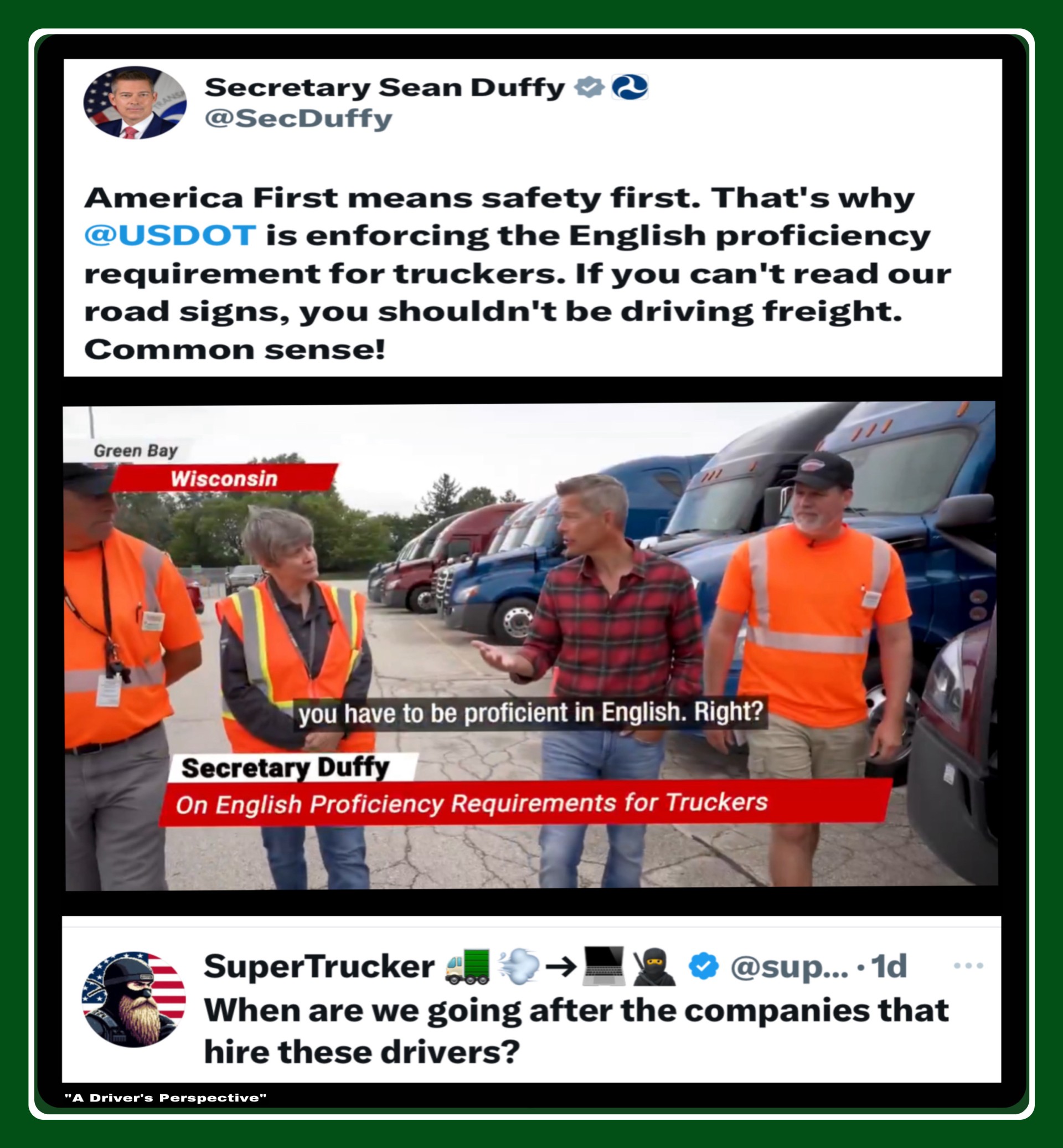
When Secretary Sean Duffy took to social media this week to announce that the U.S. Department of Transportation is now enforcing the English proficiency requirement for truck drivers, many of us in the industry had the same initial reaction: It’s about time.

“If you can’t read our road signs, you shouldn’t be driving freight,” Duffy posted.

Simple. Clear. True. And yetincomplete.

Because while it’s refreshing to see someone in Washington finally acknowledge the obvious dangers of putting non-English-speaking drivers behind 80,000-pound vehicles, that’s only the tip of the iceberg. The real question came from the reply section, where one user nailed the heart of the issue:

“When are we going after the companies that hire these drivers?”

The Real Problem Isn’t Just the DriversIt’s the Corporations That Exploit the System

Let’s get something straight: no one wakes up in Guatemala, India, or Ukraine and just walks into a trucking job in America. They are brought hereoften recruited, sponsored, and fast-tracked by megacarriers, staffing agencies, and labor brokers that care more about cheap labor than public safety.

And for years, those same companies have operated in a gray zonetaking full advantage of visa programs, relaxed oversight, and political silenceto flood our roads with underqualified, undertrained, and often barely English-literate drivers. Why? Because it cuts costs. Because it reduces liability. Because they know the government hasn’t had the will to enforce the rules until now.

But if we’re going to have an honest conversation, we need to go deeper. This isn’t just a DOT issue. The rot starts long before FMCSA ever sees these drivers.

It Starts at the Department of Labor

Here’s how the scam works:       

  1. Carriersor the staffing firms they hide behindfile labor petitions with the U.S.  Department of Labor (DOL), claiming they “can’t find enough American drivers.” These petitions are often exaggerated or outright false.
  2. Once the Labor Department approves the claim, it moves to Homeland Security and USCIS, where the work visa (often H-2B or similar) is granted.
  3. Thenand only thendoes the Department of Transportation get involved. DOT and FMCSA are tasked with verifying that the driver has a valid CDL, a medical card, and meets the English proficiency standard.


That’s it. DOT doesn’t screen the labor petition. It doesn’t verify whether the labor shortage was real. By the time FMCSA steps in, the driver is already behind the wheel.

So let’s be honestthis is a labor issue first, an immigration issue second, and only then does it become a transportation issue.

The fraudthe false claims, the visa abuse, the backdoor hiring schemesall begin at the Department of Labor. But it’s DOT that gets stuck holding the bag when these drivers can’t read a road sign, can’t follow basic safety commands, or cause a catastrophic crash.

The “English Requirement” Has Been Ignored for Years

FMCSA regulations (49 CFR §391.11) have long required drivers to be able to “read and speak the English language sufficiently to converse with the general public, to understand highway traffic signs and signals….and to make entries on reports and records. That’s not new.

What’s new is that we finally have a DOT Secretary willing to say the quiet part out loudthat English proficiency is about safety, not xenophobia, and that failing to enforce it puts everyone at risk on American highways.

But let’s not pretend this just became a problem.  It’s been deliberately overlooked by both Republican and Democrat administrations. Why? Because the real culpritsthe megacarriers and politically connected logistics firms – also line the pockets of politicians and bankroll the lobbying arms that shape transportation policy.

What Accountability Really Looks Like

If Secretary Duffy and the DOT are serious about safety, then enforcement must go beyond individual drivers and reach the hiring chains, recruiters, and contract firms responsible. That includes:

  • Auditing carriers that consistently employ non-English-speaking or unqualified drivers
  • Fining or suspending operating authority for repeat offenders
  • Revoking CDLs issued through corrupt or fast-tracked testing sites
  • Targeting staffing agencies that specialize in visa-based driver pipelines
  • Reforming the visa system so it prioritizes safety and qualificationsnot labor exploitation

You don’t solve the root of a problem by pruning leavesyou pull out the entire rotten root.  And in this case, that root is corporate greed, backed by political protection and enabled by federal labor loopholes.

A Turning PointOr Another PR Move?

The video Duffy posted shows a yellow truck weaving through traffic, paired with the caption “a lot of behavior change right now.” Let’s hope that’s not just spin. Let’s hope this marks the beginning of real, structural change in an industry where too many have looked the other way for too long.

We don’t need more photo ops. We need prosecutions.
We don’t need more tweets. We need teeth in the law.
And we certainly don’t need to keep sacrificing safe, qualified American drivers in order to appease the profit margins of billion-dollar freight companies.

America First means protecting America’s highways, America’s labor force, and America’s public safetynot just checking a box at the border.

The Bottom Line

If a driver can’t read a road sign, they shouldn’t be behind the wheel. But if a company lies to the government to get that driver here in the first placethey shouldn’t be in business.

So here’s the challenge, Secretary Duffy:

Don’t stop at English enforcement.
Start holding the companiesand the labor fraudaccountable.

Only then will we see the “behavior change” this industryand this countrytruly needs.

Will Cook | A Driver’s Perspective